
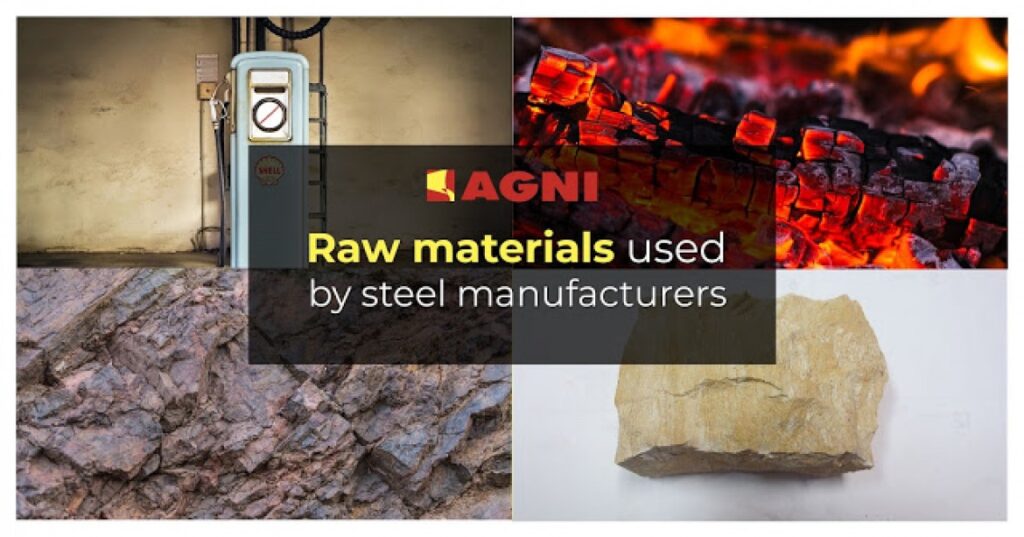
The main steel raw materials are iron ore, metallurgical (coking) coal, limestone and other fluxes, recycled steel scrap, direct reduced iron (DRI), fuel gases and alloying elements such as manganese, chromium, nickel and vanadium. The quality of each steel raw material directly decides the strength, durability and consistency of the finished steel product.
Steel is one of the most important materials of the 21st century. It is used everywhere, from precision surgical tools in hospitals to the TMT reinforcement bars that hold our homes together. But the performance of any steel product starts long before it reaches a construction site. It starts with the steel raw material and how carefully it is processed at every stage.
In this guide, we explain the essential raw materials for steel production, what each one does, and why raw material quality matters for the final product.
What Is Steel Raw Material?
Steel raw material refers to the natural and processed inputs used to produce steel. In the traditional blast furnace–basic oxygen furnace (BF-BOF) route, the main inputs are iron ore, coke and limestone. In the electric arc furnace (EAF) route, the main inputs are steel scrap and direct reduced iron (also called sponge iron). Both routes use fuel gases for heating and alloying elements to achieve the required steel grade.
1. Iron Ore: The Primary Steel Raw Material
Iron ore is found in the Earth’s crust in oxidized form. The two most commercially important types are:
| Iron Ore Type | Chemical Formula | Iron Content |
|---|---|---|
| Magnetite | Fe₃O₄ | about 72.4% Fe |
| Hematite | Fe₂O₃ | about 69.9% Fe |
Because these ores carry a high iron content per unit mass, they are processed (often into sinter or pellets) and fed into the blast furnace. According to World Steel Association data, roughly 1.4 to 1.5 tonnes of iron ore are needed in the blast furnace route to produce one tonne of iron and steel.
Inside the blast furnace, iron ore is reduced to molten pig iron. This pig iron is then refined into steel, usually in a basic oxygen furnace, before being cast into billets, blooms or slabs. Learn more about the role of iron in the steel manufacturing industry.
2. Coking Coal and Coke: Fuel and Reducing Agent
Metallurgical (bituminous) coal is heated to around 1,000–1,100°C in coke ovens, in the absence of air. This drives off volatile impurities and leaves behind a hard, porous, carbon-rich material called coke.
Coke plays two roles in the blast furnace:
- Fuel: It burns with a blast of hot air to generate the intense heat needed to melt the iron.
- Reducing agent: It produces carbon monoxide, which removes oxygen from the iron ore and leaves behind molten iron.
This is why coal and coke are considered essential steel raw materials in integrated steel plants.
3. Fuel Gases: The Heat Source Across the Plant
A steel plant uses many fuel gases, from preheating the blast furnace air to cutting steel billets with torches. Common fuel gases include:
- Blast furnace gas
- Coke oven gas
- Converter (BOF) gas
- Natural gas
- LPG
- Producer gas
- Acetylene
Many of these gases are by-products of steel making itself and are recovered and reused as fuel, which improves energy efficiency. The choice of gas for each process depends on its calorific value, flammability, flash point and flame temperature.
4. Flux Materials: Removing Impurities
Fluxes such as limestone and dolomite are charged into the furnace along with iron ore and coke. At high temperatures, they combine with unwanted impurities like silica, sulphur and phosphorus to form slag, which floats on top of the molten metal and is removed.
Without effective fluxing, impurities would remain in the steel and weaken its structure, making it brittle or prone to cracking.
5. Steel Scrap and Direct Reduced Iron (DRI)
Not all steel is made from iron ore in a blast furnace. The electric arc furnace route mainly uses:
- Steel scrap: Recycled steel from old structures, vehicles and industrial waste. Steel is 100% recyclable without losing its properties, making scrap a sustainable steel raw material.
- Direct Reduced Iron (DRI) / Sponge iron: Iron ore reduced in solid state using natural gas or coal. India is one of the world’s largest producers of DRI.
The EAF route generally has a lower carbon footprint than the blast furnace route, which is why scrap and DRI are growing in importance.
6. Alloying Elements: Creating Different Steel Grades
Once the base steel is refined, alloying elements are added to give it specific properties:
| Alloying Element | Main Benefit |
|---|---|
| Manganese | Strength, hardness, removes sulphur |
| Chromium | Corrosion resistance (key in stainless steel) |
| Nickel | Toughness and corrosion resistance |
| Molybdenum | High-temperature strength |
| Vanadium | Grain refinement, strength |
| Tungsten | Hardness and heat resistance |
| Aluminium | Deoxidation, fine grain structure |
| Copper | Atmospheric corrosion resistance |
The purity and precise dosage of these elements determine how uniform the steel’s crystalline structure is, which directly affects strength, ductility and weldability.
Why Steel Raw Material Quality Matters
The quality of steel raw material affects every stage of production. High-grade iron ore reduces slag and energy use. Low-ash coking coal produces stronger coke. Clean scrap and pure alloying elements give consistent chemistry. Together, these factors decide whether the final steel meets the required standards for strength, elongation and bendability, which is critical for products like TMT bars used in construction.
India’s Growing Strength in Steel
With continuous advances in steel making technology, India has become the world’s second-largest producer of crude steel. Strong domestic demand, supported by government investment in infrastructure and housing, along with growing exports, has made steel a major contributor to India’s economic growth. Many businesses that benefit from the steel industry are also thriving as a result.
At Agni Steels, we believe great steel begins with great raw materials. That is why we carefully select and process every input to manufacture high-quality TMT steel bars that are shaping the constructions of tomorrow.
Frequently Asked Questions
What are the main raw materials for steel?
The main steel raw materials are iron ore, coking coal (coke), limestone, steel scrap, direct reduced iron (DRI), fuel gases and alloying elements such as manganese, chromium and nickel.
What is the most important steel raw material?
Iron ore is the most important raw material for steel making, as it is the primary source of iron in the blast furnace route.
Why is coke used in steel making?
Coke serves as both fuel and a reducing agent. It generates heat and produces carbon monoxide, which removes oxygen from iron ore to leave molten iron.
What is the role of limestone in steel production?
Limestone acts as a flux. It combines with impurities such as silica, sulphur and phosphorus to form slag, which is separated from the molten metal.
Can steel be made without iron ore?
Yes. The electric arc furnace route can produce steel mainly from recycled steel scrap, often combined with DRI.
How does raw material quality affect TMT bars?
Better raw materials produce steel with consistent chemistry and fewer impurities, giving TMT bars higher strength, better ductility and improved earthquake resistance.