
Previously, construction was all about building structures and residences with bricks, clay, and cement. However, in 2026, the industry emphasises eco-friendly, durable, easy-to-build and maintain materials that do not compromise on longevity and functionality. In this blog, we will discuss modern building materials, their importance, and their application to support our rapidly growing urban population.
What Are Modern Building Materials?
The modern construction materials primarily include high-strength composite materials, recycled materials, and smart home appliances. These are much lighter, quicker to install, and less harmful to the environment than traditional construction materials.
Importance of Using Modern Materials in Construction
The advancement of modern building materials has benefited us by enabling sustainability and efficient resource use on a limited budget. Below are some modern materials and their importance in construction.
TMT Steel Bars – Strong Reinforcement for Modern Structures
Thermo-mechanically treated bars are resistant to high levels of tension and torsion, withstand extreme temperatures, and resist corrosion. It is ideal for constructing skyscrapers, bridges, and high-rise buildings in areas subject to severe weather disturbances.
Ready-Mix Concrete (RMC), Fly Ash Bricks, and AAC Blocks
RMC is a revolutionised product that provides an even surface and reduces material loss. For a more sustainable alternative, choose Fly Ash bricks, which are made from leftover materials of factories. Similarly, Autoclaved Aerated Concrete (AAC) blocks can be an excellent option for creating a well-insulated environment, reducing heating costs.
Prefabricated and Precast Concrete Materials
These concrete products are expertly pre-manufactured in factories, then assembled on-site, eliminating traditional curing delays. This delivers projects 50% faster and boosts overall efficiency, resulting in superior construction outcomes.
Structural Steel and Composite Materials
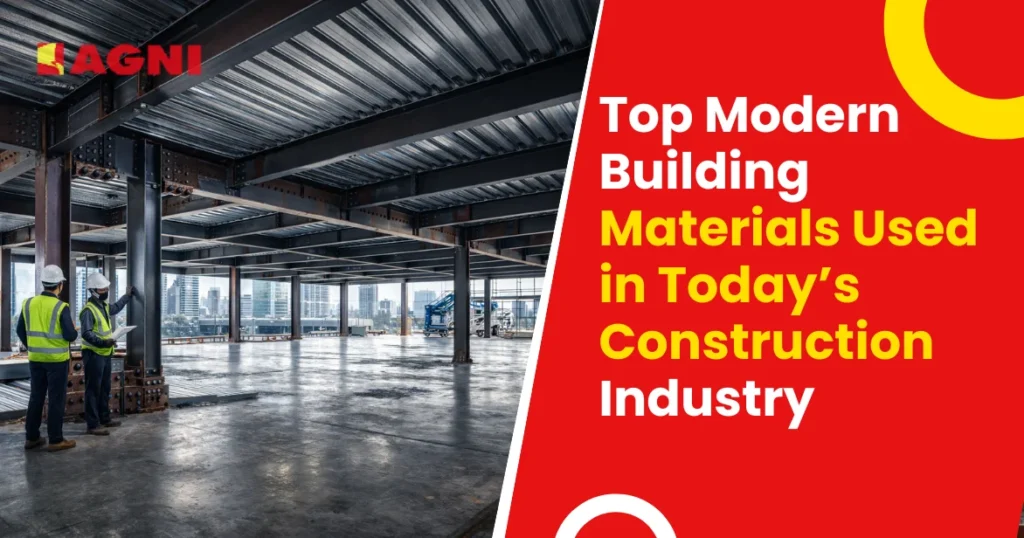
Structural steel is ideal for building and renovating larger interior spaces without traditional columns to provide structural support. Composite materials combine steel or fibres with concrete to increase load-bearing capacity without adding weight to the structure.
Glass, Aluminium, and Facade Materials
Modern Structures utilise low-e glass in combination with a high-density aluminium profile. Using this combination of glass and aluminium ensures maximum natural light enters the building and a visually appealing aesthetic. The low-e glass can be self-cleaning, helping maintain a clean exterior, even in dusty areas.
Gypsum Boards and Drywall Systems
Drywall gypsum boards enable rapid, effortless interior fireproofing and finishing. This non-flammable material comes with superior sound insulation and is easy to integrate into ceilings and partitions. Unlike plastering, it doesn’t take weeks to build and cure.
Innovative and Sustainable Building Materials
Smart Building Materials include sensor-embedded concrete that monitors your building’s structural integrity in real time and regulates temperature. Similarly, bamboo composite materials help you achieve a net-zero goal by tracking energy usage via IoT.
Benefits of Modern Building Materials in Today’s Construction Industry
The modern materials used in today’s build are more than just a trend; they are sustainable, durable, long-lasting and deliver the finest results. Here are some benefits of modern building materials:
- Durability & Safety: These modern materials can withstand harsh weather & seismic events.
- Saving Money: It’s conventional and quick to work with, thus lowering labour costs & time.
- Environment Friendliness: It produces minimal to no waste by recycling factory materials & lower emissions.
- Energy Performance: With better insulating properties, it reduces electric and heating/cooling bills.
- Aesthetically Pleasing: Modern Materials offers sleek designs that cater to all visions and inspirations.
Applications in Residential, Commercial, and Infrastructure Projects
The construction sector is benefiting from the use of modern materials that enhance durability, sustainability, and efficiency. They include advanced composites, innovative technologies, and eco-friendly alternatives, tailored to project requirements.
Residential: Use of AAC Block (Autoclaved Aerated Concrete) enables the construction of lightweight, insulated walls, resulting in expedited home construction and lower energy costs. Similarly, the use of recycled plastic bricks provides waterproofing and fire resistance, while Cross-Laminate Timber (CLT) enables modular construction with seismic resistance and a lower carbon footprint.
Commercial: GFRC panels are a great way to make durable buildings that will not rust or corrode. Consider using smart glass to reduce energy consumption in office buildings by adjusting tint according to energy needs. Mass Timber is an excellent choice for retail and hospitality due to its fire-resistant properties.
Infrastructure Projects: With 5-10% greater tensile strength and 60% lower cement consumption than standard concrete, Graphene Concrete provides the highest load-bearing capacity. It is therefore an excellent alternative to reinforced concrete in large structures such as bridges and tunnels.
Also Read: Modern vs Traditional Building Materials: Which Is Better for Your Home?
Conclusion: The Future of Construction with Modern Building Materials
Moving ahead, innovative building materials are expected to drive zero-waste, circular practices across projects. Advanced building materials, such as mass timber and self-healing concrete, provide structural longevity to buildings. Smart glass and adaptive composites are equally beneficial for energy-responsive buildings, revolutionising urban designs for resilience and efficiency.
