
Introduction
The Indian steel industry is one of the pillars of the country’s economy and plays a significant role in its GDP, employment, and industrial production.
This blog explores primary steel producers in India and the role they play in shaping the future of one of the world’s most vital industries.
What Are Primary Steel Manufacturers?
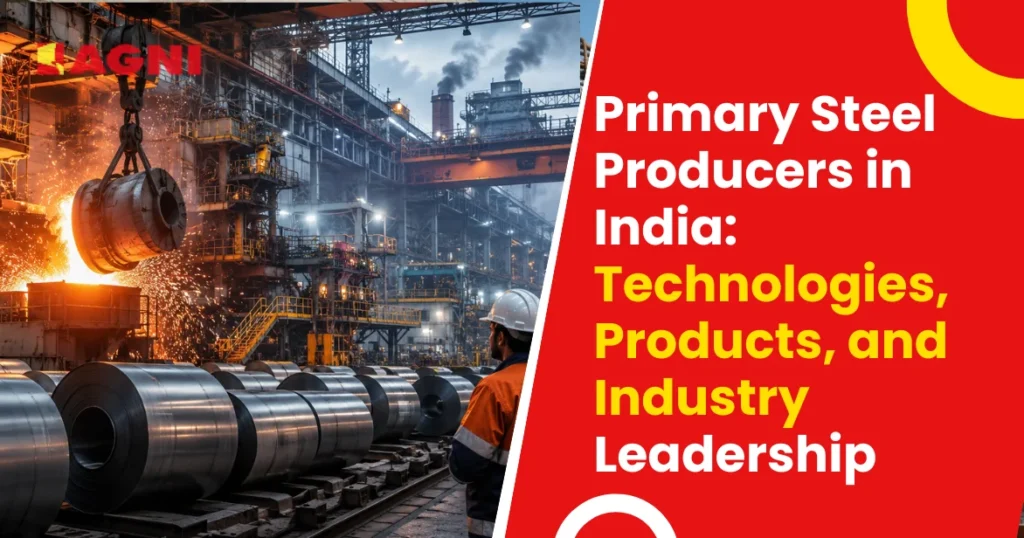
Primary steel producers are steel manufacturers that produce steel directly from raw materials such as iron ore, coal, and limestone.
Unlike the secondary producers that recycle scrap metal, primary producers are large-scale integrated steel plants that carry out the entire production process – from mining to rolling.
Summary of Primary Steel Production in India
India is the world’s second-largest crude steel producer, with a total installed capacity of over 150 million tonnes per annum (MTPA).
This industry is driven by a mix of public-sector and private-enterprise activities, with steel plants located in states such as Jharkhand, Odisha, Chhattisgarh, and Gujarat.
Technologies in Use by Primary Manufacturers of Steel
Most steel manufacturers have greatly increased their technological capacities over the past few years.
Some of the key technologies used are:
- Basic Oxygen Steelmaking (BOS) to produce high-volume, high-quality steel.
- Continuous casting machines that enhance yield as well as save energy.
- Top Gas Recovery Turbines (TRTs) are used to ensure energy efficiency in blast furnaces.
Types of Steel Products Produced in India
Indian steel manufacturers manufacture a diverse set of products to serve different industries:
- Flat products such as hot-rolled coils, cold-rolled coils, galvanised sheets, and electrical steel.
- Long products such as bars, rods, rails and structural sections are used in construction and railways.
- Stainless steel for automotive, kitchenware and industrial use.
- Speciality steel for defence, aerospace and precision engineering.
Contribution of Primary Steel Manufacturers Towards Infrastructure
Steel forms the backbone of India’s ambitions for infrastructure projects. The role of steel manufacturers in India in the nation’s development is immeasurable.
The government’s push under initiatives such as PM Gati Shakti and the National Infrastructure Pipeline (NIP) has further increased steel demand, with major producers stepping up to meet it through capacity expansions and just-in-time delivery models.
Industry and Market Trends
The steel industry in India is experiencing a shift in leadership dynamics, driven by factors such as consolidation, foreign investment, and digital transformation.
Some prominent trends include the following:
- Increased exports to markets in the Middle East, Europe and Southeast Asia.
- Increased focus on high-strength steel products and value-added products.
- Competitive strategies like strategic mergers and acquisitions are redefining the competitive landscape.
Difficulties Faced by Steel Producers in India
The industry has been growing steadily, but there are various challenges that the industry faces:
- The reliance on imported coking coal exposes the producers to the global price fluctuations.
- The process of producing steel consumes a lot of energy, and increasing fuel costs affect the margins.
- Stricter emission norms require costly upgrades to existing plants.
- Inefficiencies in logistics and transportation contribute to the increased operational costs.
Future of Primary Steel Industry in India
The future of India’s primary steel industry is certainly bright.
Future growth will be fuelled by:
- Increase in production under the Production-Linked Incentive (PLI) scheme.
- Growing domestic consumption due to urbanisation and housing demand.
- Technological advances that would enable a switch to more environmentally friendly, low-carbon steel.
Last Thoughts
The Indian primary steel manufacturers have shown incredible adaptability – not only adopting innovative technologies but also diversifying their product range and making significant contributions to the development of infrastructure. The role of primary steel producers in India towards the country’s 2030 capacity goals will only grow more significant going forward.