
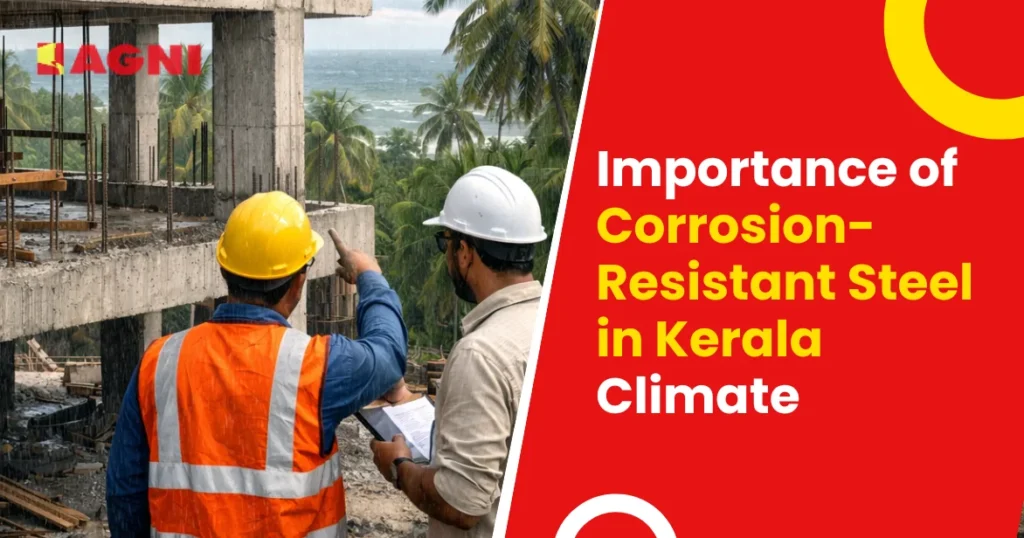
In Kerala, buildings and infrastructure are always exposed to moisture, salty air, and weather variations, which can greatly affect structural materials. Among them, steel is particularly susceptible; choosing the right steel type is crucial for safe, long-lasting construction. This blog discusses why corrosion-resistant steel in Kerala has become a key building material in the state.
Understanding Kerala’s Climate Challenges for Construction
Kerala experiences a tropical climate characterised by intense monsoon seasons, heavy rainfall and warm weather all through the year. The coastline is also extensive in the state, and this exposes many areas to the saline sea air. These environmental conditions create a very corrosive environment for construction materials, particularly conventional steel.
Lack of proper material selection can deteriorate structural elements over time, making them unsafe and increasing repair requirements.
What Causes Steel Corrosion in Humid and Coastal Regions?
A mixture of both environmental and chemical factors leads to the corrosion of steel in the humid and coastal areas, undermining the strength of the structure.
The most important factors are:
- High moisture in the atmosphere enhances surface oxidation of steel.
- Salt particles in the air along the coastline act as catalysts of rust formation.
- Constant exposure to rainwater and humidity.
- Stagnant water or poor drainage around the structural components.
- Use of low-quality or untreated steel reinforcement.
Impact of Monsoon and High Moisture on Building Structures
Kerala’s monsoon brings prolonged rainfall, often lasting several months. Constant exposure to water enhances absorption of moisture in concrete, making it trickle down into the steel reinforcement within the concrete. When the steel is exposed to moisture, it starts corroding from the inside and may go undetected until visible damage appears.
Corroded steel increases in size with time and consequently causes cracks, concrete spalling and loss of load-bearing capacity. This not only impacts the life of the buildings but also poses serious safety concerns to the occupants.
Why Corrosion-Resistant Steel is Essential in Kerala
The climate of Kerala imposes a consistent strain on the building materials, making corrosion protection a significant factor to be considered when constructing buildings.
The significance of coastal construction steel is as follows:
- Prevents quick rusting of the material due to humidity and salinity.
- Increases the total lifespan of residential and commercial buildings.
- Retains structural integrity during prolonged monsoon seasons.
- Reduced the danger of concrete cracking internally as a result of rust expansion.
- Ensures safer structures in the coastal and heavy rainfall areas.
Benefits of Using Rust-Resistant TMT Bars
Rust-resistant TMT bars have advantages which make them suitable for use in the adverse environmental conditions of Kerala.
Here are some major advantages:
- Superior resistance to corrosion and moisture penetration.
- Stronger bonding with concrete for improved load-carrying capacity.
- The increased flexibility and ductility minimise the risks of structural failures.
- Longer service life as opposed to conventional steel bars.
- Improved safety and reliability of the overall structure.
Applications of Corrosion-Resistant Steel in Kerala Construction
Corrosion-resistant steel is commonly used in:
- Residential buildings such as houses and apartment complexes.
- Commercial buildings such as offices and shopping centres.
- Coastal and waterfront developments.
- Bridges, flyovers, and other public infrastructural works.
- Industrial buildings are exposed to chemicals and moisture.
Choosing the Right Steel for Long-Lasting Structures
The choice of steel is an important step to ensuring the durability and safety of any construction project.
When choosing the best steel for the Kerala climate, the following factors should be taken into account:
- Proximity of the construction site to coastal areas.
- Level of exposure to downpours and humidity.
- Quality standards and certification of the steel.
- Proven corrosion resistance and tensile strength.
- Guidance from structural engineers and construction experts.
How Corrosion-Resistant Steel Saves Maintenance Costs
Though corrosion-resistant steel may involve a higher initial investment, it significantly reduces long-term expenses.
Here is how it helps save expenses in the long run:
- Reduced the number of repairs caused by rust corrosion.
- Less need for structural reinforcement replacements.
- Minimal expenditure on anti-corrosion treatments and finishes.
- Fewer interruptions caused by maintenance.
- Long-term financial benefits from increased durability.
Conclusion: Building Stronger & Safer Structures in Kerala
The climate in Kerala requires smarter construction decisions, particularly regarding steel reinforcement. Using corrosion-resistant steel in Kerala and informed choices, builders can confidently construct resilient structures that withstand the harsh weather of Kerala and minimise expenses and risks in the long run.
