
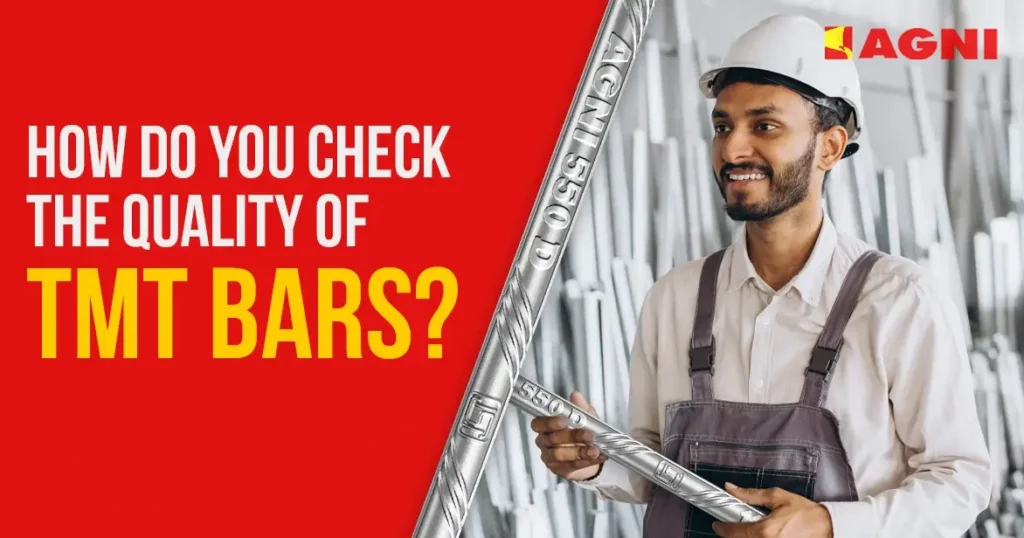
Quality plays a paramount role when it comes to construction. If structural integrity and durability are desirable, TMT (Thermo-mechanically treated) steel bars should be your way forward. And we get it. Almost every brand out there claims to have the best quality TMT bars. But, as a homeowner or a builder, you should know the hows and whys of assessing the quality of TMT bars before deciding to buy them.
Here, we’ll guide you through how to check the quality of TMT bars.
Why TMT bars?
TMT bars are the ideal choice for construction purposes, backed by high tensile strength and flexibility. The manufacturing process generally involves heating and cooling simultaneously, which typically enhances the strength and ductility of these bars. Not all TMT bars are created the same way. One needs to consider one or more factors before investing in them
How do they test TMT bars?
While brands largely revolve around authenticity and trust, a few tests can help you assess the quality of TMT bars.
Certifications
While purchasing TMT bars, check for certificates from organisations recognised by the Government of India. Generally, check for certifications from the Bureau of Indian Standards. Also, make sure they conform to standards set by ISO. These certifications prove that the brand manufactures products that strictly adhere to standards. Also, purchasing certified steel can lower the risks of contaminated products in your construction.
Chemical tests
Conducting a chemical analysis test is essential to ascertain the content of TMT bars. Spectrometers analyse carbon, phosphorus, sulphur, copper, manganese, and chromium. The permitted limits for these elements need to be upheld under BIS regulations to guarantee performance and durability. The balanced chemical makeup of a high-quality TMT bar increases its strength and corrosion resistance.
Tensile Strength
One of the most important measures of a TMT bar’s quality is its tensile strength. Universal Testing Machines (UTM) are commonly used in this test to determine the maximum force a bar can bear before breaking. High-quality TMT bars must have a high tensile strength to withstand large loads during construction.
Bend and Rebend
The ductility of TMT bars is assessed using the bend and rebend test. For this test, a sample bar is bent at two different angles: 180 degrees at first and 135 degrees after soaking in hot water. Under these circumstances, a high-quality bar should bend without breaking or cracking. This test guarantees the steel will not lose integrity under stress during construction.
Distinctive Rib Design
Their rib design significantly influences TMT bars’ ability to connect with concrete. Superior TMT bars have a distinctive rib pattern that improves grip and guarantees a solid cement bond. Per ISI guidelines, these ribs should be transverse rather than longitudinal to avoid cracking while bending.
The Significance of Quality while choosing the best quality TMT bars
Quality is non-negotiable when choosing TMT bars. There are several reasons why quality plays such a crucial role in the assessment process.
- Safety: There are safety concerns when structural breakdowns result from low-quality steel.
- Durability: Because they are resistant to wear and corrosion, high-quality TMT bars extend the life of structures.
- Cost-Effectiveness: Because of their endurance, premium TMT bars can have reduced long-term maintenance costs despite having a greater initial cost.
Selecting India’s Highest-Quality TMT Bars
When looking for the highest-calibre TMT bars in India, consider reputable companies that are well-known for their dedication to quality and client happiness. Brands such as Agni have established their reputations through strict adherence to industry standards and rigorous testing.
The strength and longevity of TMT bars are perfect for reinforcing concrete constructions. Their production procedure results in a high yield and tensile strength that can withstand large loads without deforming, a robust exterior layer, and a softer inner core. The ribbed design ensures structural stability by strengthening the link between steel and concrete. Additionally, TMT bars can bend without breaking, which is important in regions vulnerable to earthquakes.
They also have improved corrosion resistance, which reduces rust development even in abrasive settings. TMT bars are adaptable and appropriate for various construction projects, from residential buildings to major infrastructure works, with different grades (Fe 415, Fe 500D, Fe 550, Fe 600) available.
How Is the ISO Certified TMT Bar Brands’ Quality Assured?
When evaluating the reliability of steel for construction, one major indicator is whether the manufacturer follows ISO (International Organisation for Standardisation) guidelines. Many builders and homeowners often ask, “How is the ISO certified TMT bar brands’ quality ensured?” The answer lies in the stringent global standards ISO sets for manufacturing, safety, and performance.
1. Standardised Manufacturing Processes
ISO-certified TMT bar brands use controlled, systematic production methods. Every stage—right from raw material selection to quenching and tempering—is monitored to maintain consistency. This standardisation ensures that every bar, regardless of batch, meets the same high-quality benchmarks.
2. Strict Chemical Composition Checks
ISO certification requires adherence to specified chemical limits. This guarantees that the steel has the correct balance of carbon, manganese, sulphur, and phosphorus. Such a balanced composition directly improves the bar’s strength, ductility, and corrosion resistance.
3. Regular Mechanical Testing
To maintain ISO certification, manufacturers must conduct routine mechanical tests. These include tensile strength, yield strength, elongation, and bend–rebend tests. This ensures that every bar performs reliably under stress, making ISO-certified TMT bars ideal for earthquake-prone and load-intensive constructions.
4. Robust Quality Control Systems
ISO-certified brands follow a structured quality management system (QMS), which includes continuous monitoring, documentation, and improvement. This prevents quality deviations and ensures consistency across all products released into the market.
5. Enhanced Corrosion & Durability Standards
ISO standards also assess durability factors like corrosion resistance. This is especially important in coastal regions like Chennai, where steel is exposed to salt-laden air. ISO-certified TMT bars undergo specialized treatments to improve longevity and structural reliability.
6. Greater Trust & Traceability
ISO certification requires traceability—from raw materials to finished products. This transparency builds trust and helps consumers verify authenticity. Builders prefer ISO-certified brands because they guarantee predictable performance and reduced chances of structural failure.
Conclusion
To summarise, evaluating the TMT bar quality is crucial in any building project. You can choose the right steel for your building needs by conducting various tests, including chemical analysis, tensile testing, and bend testing, and ensuring the right certifications are in place. Prioritise your purchases of premium materials, such as those supplied by reliable manufacturers, at all times to guarantee building projects that are safe, long-lasting, and economical.
Selecting high-quality steel is essential for extending the life of your structure and preventing accidents. So remember these tips the next time you search for high-quality steel in Chennai or anywhere else in India. If you are looking for a brand that would make up to all your expectations, Agni Steels is the brand you should choose.