
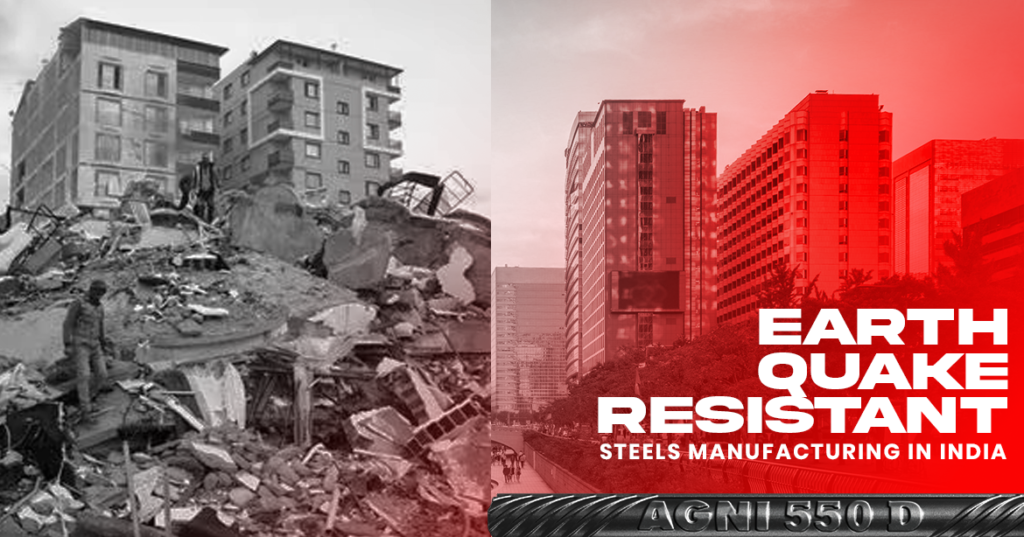
India lies in one of the world’s most seismically active regions, with nearly 60% of the landmass prone to earthquakes. As urbanisation and vertical construction continue to rise, the demand for earthquake-resistant steel has become critical. This has led to significant advancements in earthquake-resistant steel manufacturing in India, where innovation, engineering, and safety standards come together.
This blog explores how earthquake resistant steels are manufactured in India, their importance, and their role in creating resilient infrastructure.
Understanding Earthquake-Resistant Steel
Earthquake resistant steel is designed to absorb, resist, and dissipate seismic energy without sudden failure. Unlike conventional reinforcement steel, it focuses on:
-
High tensile strength
-
Superior ductility
-
Controlled deformation
-
Long-term durability
These properties help structures withstand seismic forces and reduce the risk of collapse.
Why Earthquake Resistant Steel Is Crucial in India
India’s diverse geography includes multiple seismic zones, from moderate to very high risk. Earthquakes can exert sudden lateral forces on buildings, making conventional materials inadequate.
Earthquake-resistant steel ensures:
-
Reduced structural damage
-
Improved safety for occupants
-
Compliance with Indian seismic codes
-
Longer lifespan of buildings
It is especially essential for high-rise buildings, bridges, hospitals, and public infrastructure.
Manufacturing Process of Earthquake-Resistant Steel in India
Indian steel manufacturers use advanced technology and strict quality controls to produce seismic-grade steel.
1. Selection of High-Quality Raw Materials
Manufacturing begins with premium-grade billets and controlled chemical composition to ensure low carbon content and high ductility.
2. Thermo-Mechanical Treatment (TMT)
Steel undergoes hot rolling followed by rapid water quenching, self-tempering, and atmospheric cooling. This process creates:
-
A strong outer layer
-
A ductile inner core
3. Controlled Rib Design
Uniform rib patterns improve bonding with concrete and enhance structural stability during seismic activity.
4. Rigorous Quality Testing
Manufacturers conduct tensile strength, elongation, bend, and rebend tests to ensure compliance with BIS standards.
Types of Earthquake-Resistant Steel Manufactured in India
Indian manufacturers produce several grades suitable for seismic zones:
-
Fe 500D – High ductility for residential and commercial buildings
-
Fe 550D – Preferred for high-rise and infrastructure projects
-
Fe 600 – Used for heavy engineering and critical structures
The “D” grade signifies enhanced ductility, a key requirement for earthquake resistance.
Compliance with Indian Seismic Standards
Earthquake resistant steel manufacturing in India follows strict regulatory guidelines, including:
-
IS 1786 – Reinforcement steel specifications
-
IS 1893 – Criteria for earthquake-resistant design
-
IS 456 – Plain and reinforced concrete code
Compliance ensures structural safety across all seismic zones.
Advantages of Earthquake Resistant Steel
-
High energy absorption during earthquakes
-
Reduced risk of brittle failure
-
Improved structural flexibility
-
Better corrosion and fire resistance
-
Lower long-term maintenance costs
These benefits make seismic-grade steel a vital investment in safety.
Role in Modern Infrastructure Development
Earthquake-resistant steel is widely used in:
-
High-rise residential and commercial buildings
-
Bridges and flyovers
-
Metro rail and transport infrastructure
-
Hospitals and emergency facilities
-
Smart city and urban development projects
Its reliability supports India’s growing infrastructure demands.
Sustainability in Earthquake Resistant Steel Manufacturing
Indian manufacturers are increasingly adopting sustainable practices:
-
Use of recycled steel
-
Energy-efficient rolling mills
-
Reduced carbon emissions
-
Longer-lasting structures with fewer repairs
This aligns safety with environmental responsibility.
Future of Earthquake Resistant Steel Manufacturing in India
With ongoing research and innovation, the future includes:
-
Advanced alloys with higher ductility
-
Smart steel integrated with monitoring systems
-
Improved seismic design compatibility
-
Wider adoption of disaster-resilient infrastructure
Earthquake-resistant steel will continue to shape safer cities and communities.
Conclusion
Earthquake resistant steel manufacturing in India is a cornerstone of safe and resilient construction. By combining advanced technology, strict quality standards, and sustainable practices, Indian steel manufacturers are playing a vital role in protecting lives and infrastructure.
As seismic risks continue to rise, choosing high-quality, earthquake-resistant steel is not just an option—it is a responsibility toward building a safer future.
