
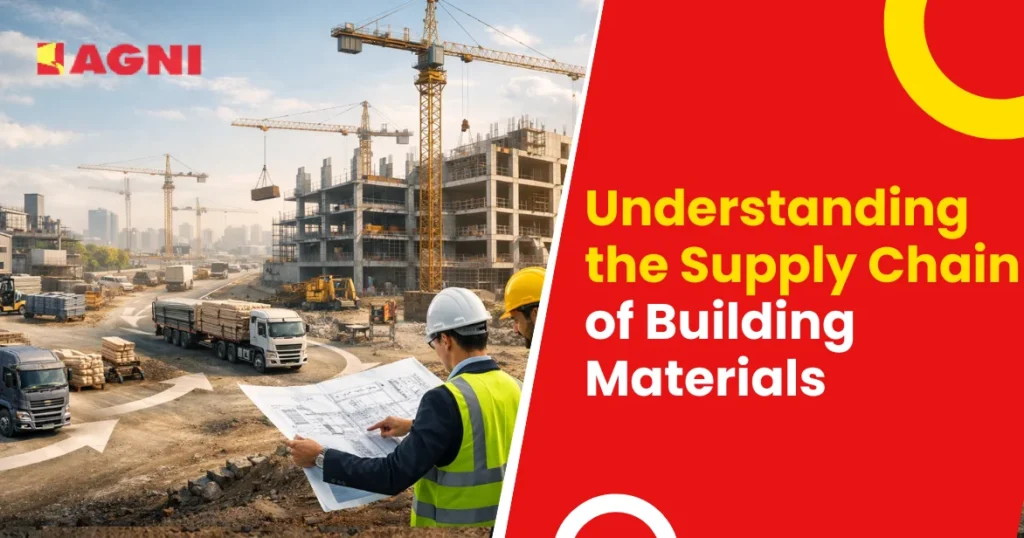
The construction sector depends extensively on a well-structured network of suppliers, manufacturers and logistics partners to help deliver high-quality materials to the project sites in time.
This blog examines the construction material supply chain, the stages involved in it, and how effective supply chain management contributes to the quality and completion of construction projects on time.
What does a Construction Supply Chain mean?
A construction supply chain is the network of organisations, resources, activities, and technologies used in the production and delivery of building materials for construction projects.
In this industry, the construction supply chains are project-based. Each project may require different amounts and types of materials, making coordination between suppliers, contractors and logistics providers very important.
Major Stages of a Building Materials Supply Chain
All stages of the supply chain are significant in ensuring that the construction projects receive the materials in the right quantities and at the right time.
The key phases include sourcing of raw materials, manufacturing and processing, warehousing and inventory management, distribution and logistics, and the final delivery to construction sites.
Raw Material Sourcing
Sourcing of raw materials is the first step in the construction supply chain.
The materials can include iron ore, limestone, coal, sand, and other natural resources needed in the production of construction materials such as cement, steel, and aggregates.
Building Materials: Manufacturing and Processing.
After the extraction of raw materials, they are sent to manufacturing plants where they are processed into construction-ready products.
The bars undergo processes such as thermo-mechanical treatment to improve their strength, ductility and resistance to corrosion.
Warehousing and Inventory Control
Construction materials are stored in warehouses and distribution centres after manufacturing, before being supplied to construction projects.
Warehousing is important in ensuring that there is a steady supply of materials, particularly when the demand of the materials varies in different projects.
Distribution and Logistics in Construction
When the materials are ready for dispatch, they must be moved from warehouses or manufacturing facilities to construction sites.
Careful planning, proper coordination and specialised vehicles are necessary to transport heavy materials like steel bars, cement and aggregates.
Delivery to Construction Sites
The supply of materials to construction sites is the last stage in the supply chain.
The construction teams tend to schedule deliveries according to the project phases to prevent site congestion and ensure effective material handling.
The Stakeholders Involved in the Building Material Supply Chain
The building materials supply chain has several stakeholders who collaborate to ensure it continues to run smoothly. These include raw material suppliers, manufacturers, wholesalers, distributors, contractors and logistics companies.
A trusted TMT bar supplier like us acts as a bridge between construction companies and manufacturers, delivering certified products that meet safety and performance standards to builders.
Issues in Construction Supply Chain Management
Despite its importance, the construction supply chain faces many challenges.
These can include changes in prices of raw materials, delays in transportation, unavailability of supplies and unforeseen changes in the project.
Significance of an Effective Supply Chain in Construction Projects
The success of construction projects depends on an effective supply chain.
The timely availability of materials helps contractors maintain project schedules and control costs.
Technology in Construction Supply Chains
Modern technology is changing construction supply chains by enhancing transparency and efficiency.
Digital systems such as supply chain management software, tracking systems, and automated inventory solutions give building material suppliers and contractors the ability to track material movement in real time.
Eco-Friendly Building Material Supply Chain
Sustainability has become a key concern in the construction sector. Most businesses are now embracing eco-friendly supply chain practices.
This involves minimising waste, recycling materials, and streamlining transport channels to reduce carbon emissions.
How to Enhance Supply Chain Efficiency in Construction
Ensuring supply chain efficiency requires careful planning and collaboration among all stakeholders.
Construction companies should work with well-trusted partners in the supply chain, keep proper inventory records and use technology to monitor the movement of materials.
Conclusion
The building material supply chain is essential to the success of any construction project. Working with experienced suppliers enables builders to purchase construction materials confidently, without worrying about quality and reliability during the construction process.